Tips to Avoid Phone Fraud
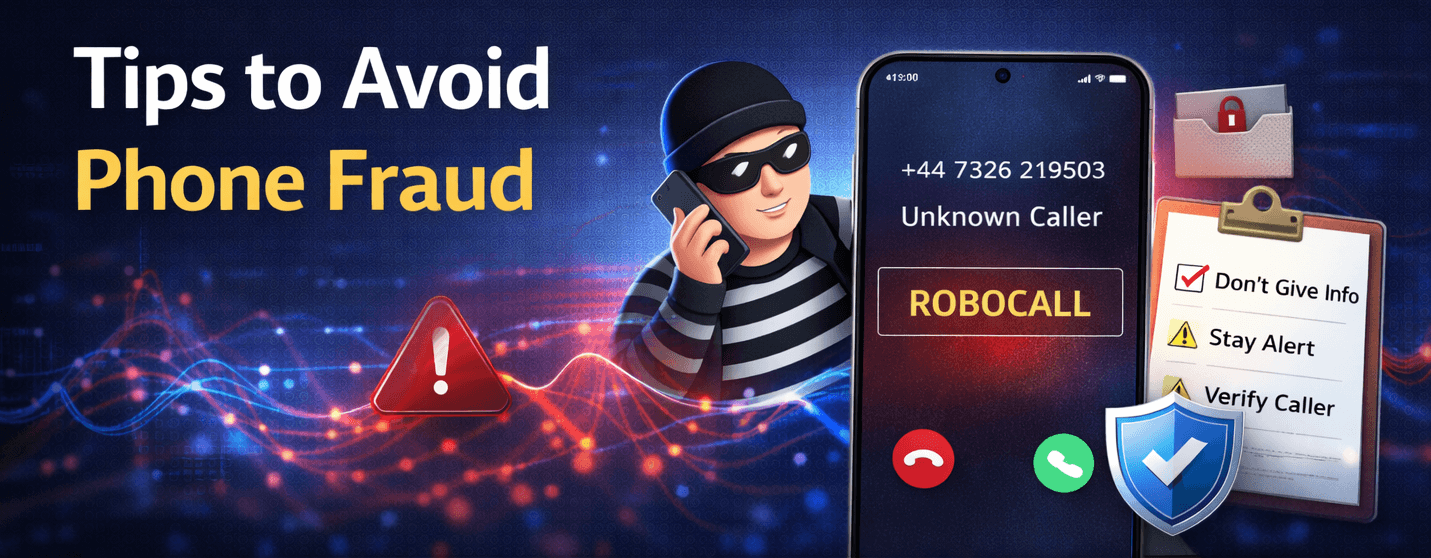
Phone fraud is one of the fastest-growing types of scams worldwide. Fraudsters use fake caller IDs, automated robocalls, and impersonation tactics to steal money and personal information. Staying informed and cautious is the best way to protect yourself.
⚠️ Legitimate organisations will never pressure you to share passwords, PINs, or one-time verification codes over the phone.
1. Never Share Sensitive Information
- Do not share bank details, card numbers, or CVV codes.
- Never reveal one-time passwords (OTP) sent via SMS.
- Avoid confirming full personal details like date of birth.
2. Be Cautious of Urgency & Threats
- Scammers often claim unpaid taxes or legal consequences.
- They may say your bank account is compromised.
- They create panic to stop you from thinking clearly.
Always hang up and verify claims independently.
3. Verify the Caller Independently
- Search the official website of the organisation.
- Call back using the verified customer service number.
- Do not trust the number displayed on caller ID alone.
4. Enable Call Blocking & Spam Protection
- Use your phone’s built-in spam filter.
- Block suspicious numbers immediately.
- Activate network-level spam protection.
- Register with the Telephone Preference Service (TPS).
5. Keep Your Devices Updated
- Install regular operating system updates.
- Use trusted security or caller ID apps.
- Enable two-factor authentication (2FA) where possible.
🔒 Small habits like verifying unknown callers and blocking suspicious numbers
can drastically reduce your risk of phone fraud.
What To Do If You’re Targeted
- Contact your bank immediately if financial details were shared.
- Change compromised passwords.
- Report the scam to official authorities.
- Warn friends or family, especially vulnerable individuals.