Historical Changes in UK Phone Codes
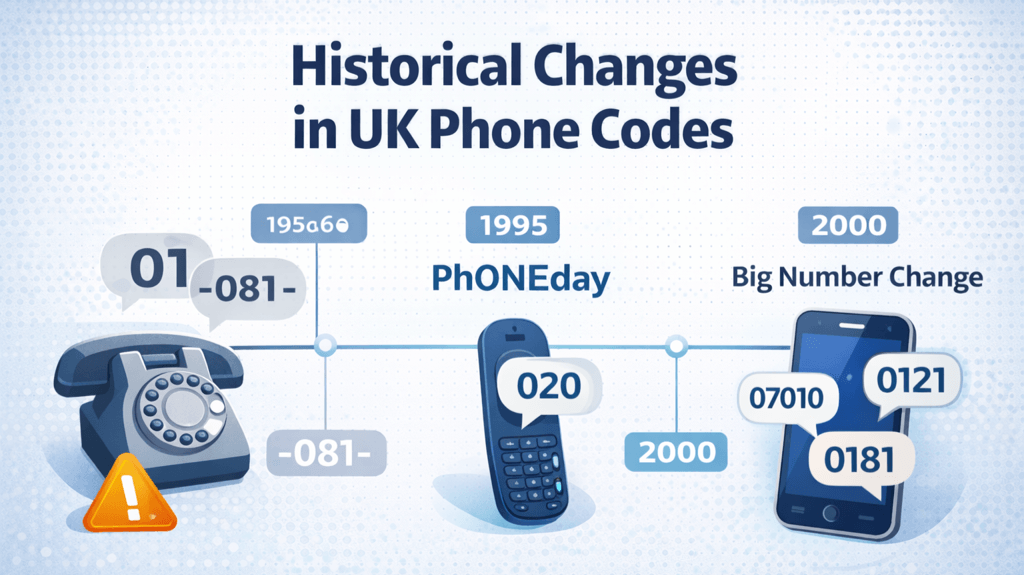
The UK telephone numbering system has changed significantly over the decades. As demand for phone numbers increased, new prefixes and longer number formats were introduced to ensure sufficient supply across the country.
Early Telephone Numbering
In the early days of UK telephony, numbers were much shorter and often included exchange names (e.g., “Whitehall 1212”). As subscriber numbers grew, the system required restructuring.
Major Historical Milestones
Subscriber Trunk Dialling (STD) allowed callers to dial long-distance numbers directly without operator assistance.
A “1” was added to all geographic area codes to increase capacity. For example, London changed from 071/081 to 0171/0181.
All UK mobile numbers were standardised to begin with 07.
Major restructuring introduced new 020, 023, 024, 028 area codes and expanded subscriber numbers in major cities.
03 non-geographic numbers were introduced for businesses and public sector organisations at standard landline rates.
Why Did UK Phone Codes Change?
- Growing population and increased phone ownership.
- Rapid rise in mobile phone usage.
- Demand for business and non-geographic numbers.
- Preparation for future telecommunications growth.
Common Misconceptions
- London’s code is “0207” or “0208” - actually, the correct area code is 020.
- Changing area codes does not change the physical location of a number.
- All 07 numbers are mobile (some 070 numbers are personal redirect numbers).