“Am I Being Scammed?” Phone Call Checklist
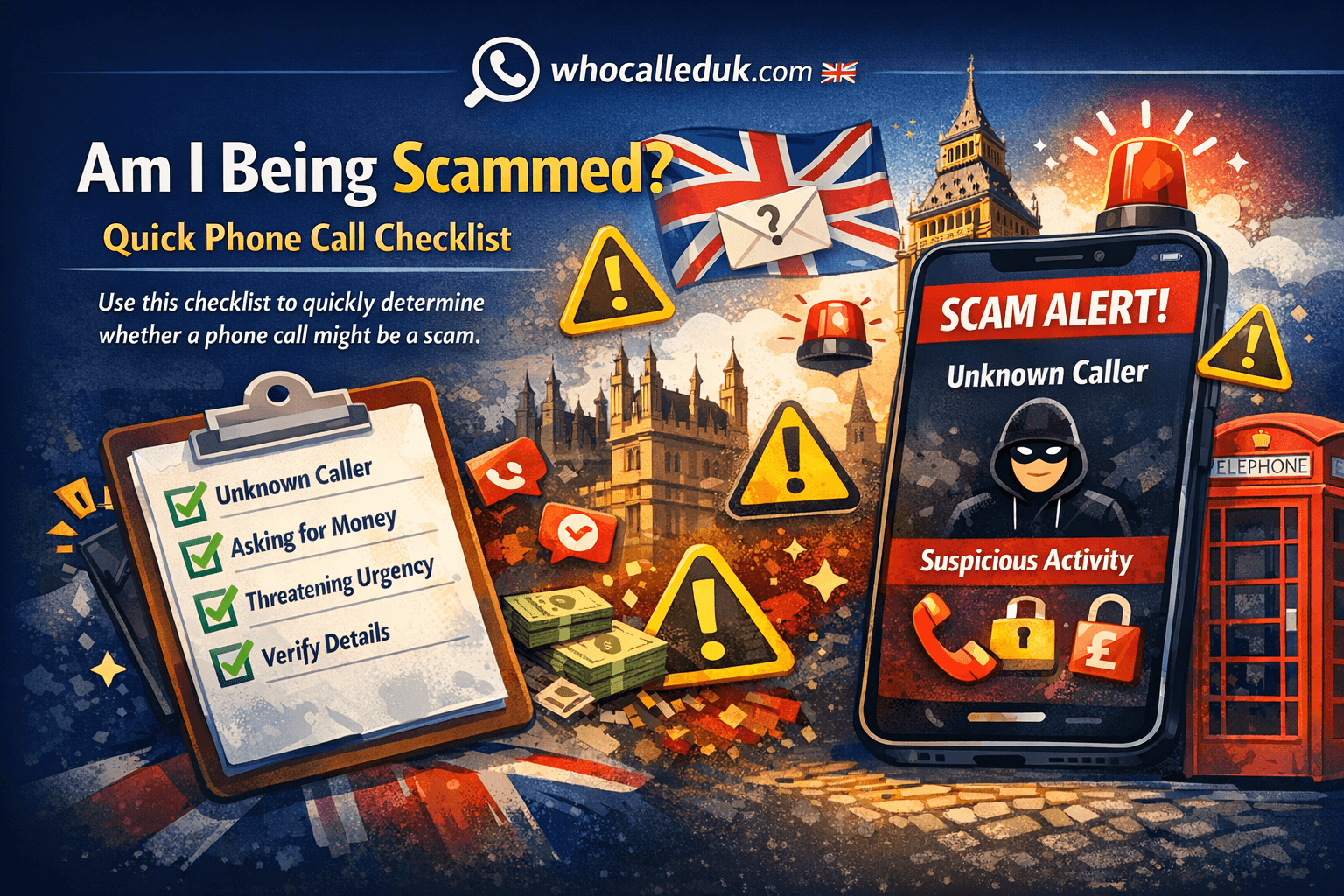
Suspicious phone calls are becoming more common across the UK. If you’ve just received an unexpected call and feel unsure, this checklist will help you quickly determine whether you are dealing with a scam attempt.
⚠️ If a call creates urgency, fear, or pressure - pause immediately.
Scammers rely on emotional reactions.
Quick Scam Detection Checklist
- Did the caller contact you unexpectedly?
- Are they asking for personal or financial information?
- Are they pressuring you to act immediately?
- Does the offer sound too good to be true?
- Did they refuse to clearly identify their company?
- Are they asking you to confirm your address or date of birth?
- Does the phone number look random or unfamiliar?
🚩 If you answered “yes” to two or more questions above, the call is likely a scam.
Common Phone Scam Tactics
- Impersonating banks, HMRC, delivery companies, or energy providers.
- Claiming your account is at risk or about to be suspended.
- Offering refunds, prizes, or investment opportunities.
- Spoofing local UK numbers to appear trustworthy.
What To Do If You Suspect a Scam
- Hang up immediately.
- Do not provide any personal details.
- Block the number on your phone.
- Report the suspicious call to the relevant UK authority.
- Check official company websites for real contact numbers.
✔ Legitimate companies will never pressure you for immediate payment
or request sensitive information during an unsolicited call.
Why Trust Your Instincts Matters
Many scam victims later say they “felt something wasn’t right.” Trusting your instincts is one of the strongest protections against fraud. If a call feels suspicious, it probably is.
If you’ve received a suspicious call, search the number on our site
to see if others have reported it. Sharing your experience helps protect others.